






Wrexham has a proud military history that we remember each year as we gather for Remembrance Sunday and Armistice Day. We take these moments to give thanks to all those who have fought and are still fighting for our freedom.
With the help of our museum and archive services, we have compiled a series of stories of some of Wrexham’s heroes.
In spite of the cease fire
Despite the announcement that the war had ended, there was still many families who would become the recipients of bad news. There was still an anxious wait for many people back home to find out whether their loved ones had survived.
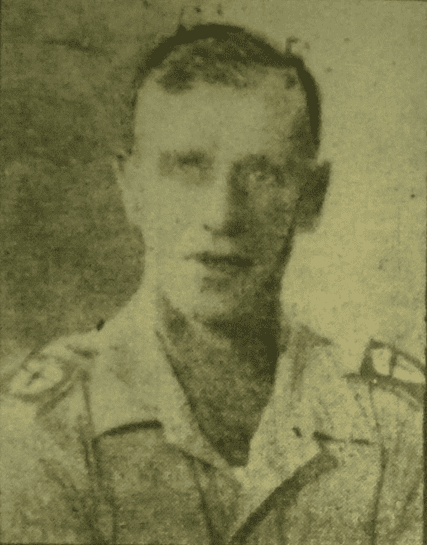
Gunner Robert Charles of Rhosddu had been serving abroad for three and a half years. He took part in all the African and Italian campaigns. He was the 35-year old son of Mr and Mrs Edward Charles of Ponciau, husband to Mrs Lena Charles and the father of Glenys Charles.
Charles had two older brothers who also served in the B.L.A. and a brother, Joseph, who had been discharged from the army on medical grounds.
Sadly, after the cease-fire had been declared, Charles’ wife received the news that he had been killed in Italy as a result of an explosion.
- Info -

Tragically, days before, she received a letter from her husband in which he rejoiced that the war was over. He told her how he was looking forward to coming home to her and their little girl.
A warm welcome home
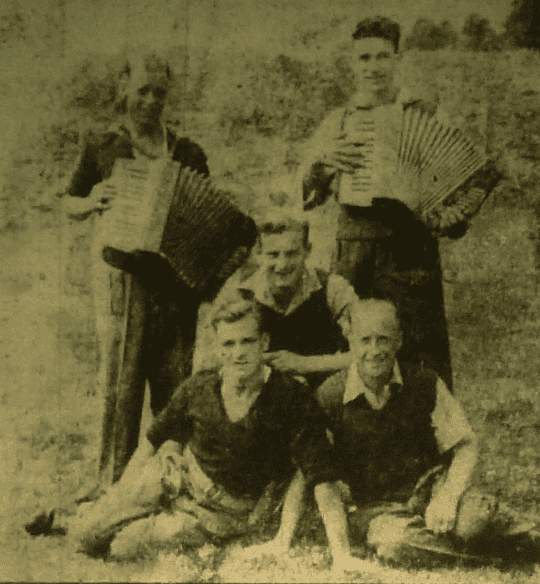
Driver Thomas Davies of Holt was captured by the Germans in France in May 1940. He was collecting fellow troops in his lorry when the vehicle took a direct hit from an enemy tank.
He evaded capture by hiding through the night and the next day, he found ally soldiers hiding in a field. The enemy quickly surrounded them and a battle ensued. Many of Thomas’ comrades were killed with machine gun fire and their ammunition ran out.
Thomas and the other survivors were taken prisoner, crammed into cattle trucks where 60 men were squeezed in. After three days of travelling, they arrived in Thorne, Poland. Here, Thomas was put to work for 14 hours a day with poor food, which was also scarce.
After nearly five years in captivity, the Russian advance got nearer to the camp. Thomas and his men were marched for 14 weeks and a distance of over 900 miles westward. The prisoners lived only off raw potatoes picked up in fields as they walked and many died during the journey.
As the march neared Hanover, British and American planes and gunfire were spotted in the distance. Thomas and two others seized the opportunity and broke free and went into hiding.
After three days of hiding, sharing a raw turnip and a stick of rhubarb between them, they spotted an American tank on patrol. The three men, wiped out with exhaustion, mustered the last of their energy and climbed onto the tank to safety.
The news of Thomas’ safe return to Britain sent waves of joy through his community and for his mother and father.
The village of Holt was draped in flags and bunting in windows, gardens and roads around the village.
As friends and neighbours gathered around his home to greet him, children carrying flags met his car at Wrexham station. Thomas’ car was stopped at the edge of his village by the children who attached a rope to the front of the car and towed him home.
As the local hero got out his car, he received a resounding three cheers and the welcome party sang the hymn, “Praise God from whom all Blessings flow”.
Why not see if you can find heroic tales from the war in your family? Our archive service has a new search room based in the Wrexham library. It is open during office hours Monday – Wednesday.
Pop in during their opening times and see who you might discover in your family tree.