Slow down, stay alert, save lives: Highway Code safety reminder
Residents, drivers, cyclists, motorcyclists and rural road users are being reminded of the importance of the Highway Code and taking extra care on local roads.
The awareness message highlights a range of everyday road safety issues, including agricultural vehicles, rural driving, drink and drug driving, mobile phone use, e-bikes and e-scooters, eye health, seatbelts, school crossing patrols and the Fatal 5.
Rural roads and agricultural vehicles
Rural roads are used by a wide range of people and vehicles, including pedestrians, cyclists, horse riders, motorcyclists, agricultural vehicles and livestock.
Drivers are encouraged to slow down, remain patient and be prepared for unexpected hazards such as mud on the road, slow-moving farm vehicles, animals, bends and narrow lanes.
Farmers, landowners and contractors also have an important role to play in keeping roads safe. Mud, water and debris from fields or sites can reduce grip on the road surface and create a danger for other road users.
Anyone using vehicles off-road is reminded to clear excessive mud and debris before travelling on public roads, and to ensure trailers and vehicles are safe, legal and not overloaded.
Drivers are also reminded to take extra care around animals. When passing horses, livestock or other animals, motorists should drive slowly, give them plenty of room and avoid sounding the horn, revving the engine or accelerating sharply.
Driving under the influence
The campaign also reminds residents that drink and drug driving can have devastating consequences.
Driving under the influence can lead to a driving ban, a criminal record, fines, imprisonment and most seriously, the risk of killing or seriously injuring yourself or others.
Mobile phone use
Mobile phone use while driving remains another key concern. It is against the law to hold and use a mobile phone or similar device while driving, including when stopped at traffic lights, queuing in traffic, supervising a learner driver. The law still applies when the phone is in flight mode.
Drivers can receive six penalty points and a £200 fine, and new drivers could lose their license. Cases that go to court can result in higher fines or a driving ban.
Hands-free devices are allowed, but drivers must not hold the phone at any time, and the device must not block their view of the road.
A phone should only be used in limited circumstances, such as in an emergency when it’s unsafe to stop, when safely parked, when making a contactless payment in a stationary vehicle, or when parking remotely using an app.
Motorcyclists
Motorcyclists are another vulnerable group being highlighted. Drivers are reminded to look properly for motorcyclists at junctions, when changing lanes and before pulling out.
The message is simple: “Now you see them, now you don’t.” Motorcyclists can be difficult to spot, but a second look can save a life.
“Dutch Reach”
The Highway Code awareness message also encourages drivers and passengers to use the “Dutch Reach” when opening vehicle doors.
This means using the hand furthest from the door handle, turning your body and checking over your shoulder for cyclists, motorcyclists and other road users before opening the door.
E-bikes and e-scooters
E-bikes and e-scooters are also covered in the awareness guidance. Electrically assisted pedal cycles must meet legal requirements, including having a motor with a maximum continuous rated power output of 250 watts and not providing assistance above 15.5 miles per hour.
Privately owned e-scooters cannot be legally used on public roads, pavements or cycle lanes, and should only be used on private land with the landowner’s permission.
Eyesight
Good eyesight is another vital part of road safety. Drivers and motorcyclists must be able to read a vehicle registration plate from 20 metres, or 20.5 metres for vehicles registered before September 2001, using glasses or contact lenses if needed.
Anyone struggling to read road signs, finding it harder to see in the dark, or experiencing changes in vision is encouraged to arrange an eye test.
School crossing patrols
The campaign is also reminding drivers of the important role school crossing patrols play in keeping children and pedestrians safe.
Motorists are legally required to stop when a school crossing patrol displays a stop sign. When the sign is raised, drivers should be prepared to stop, and when the patrol officer is in the carriageway displaying the sign, all traffic must stop and remain stopped until all pedestrians and the school crossing patrol have left the carriageway and it is safe to continue.
Most at risk
The updated Highway Code also places greater emphasis on protecting people who are most at risk on the road, including pedestrians, cyclists, horse riders and motorcyclists.
Drivers are reminded that people cycling may ride two abreast and may position themselves in the centre of the lane in some situations.
When overtaking, drivers should leave at least 1.5 metres when passing people cycling at speeds up to 30 miles per hour and give more space at higher speeds.
Drivers should pass horse riders and horse drawn vehicles at under 10 miles per hour, allowing at least 2 metres of space. They should also allow at least 2 metres of space when passing people walking in the road.
The Fatal 5
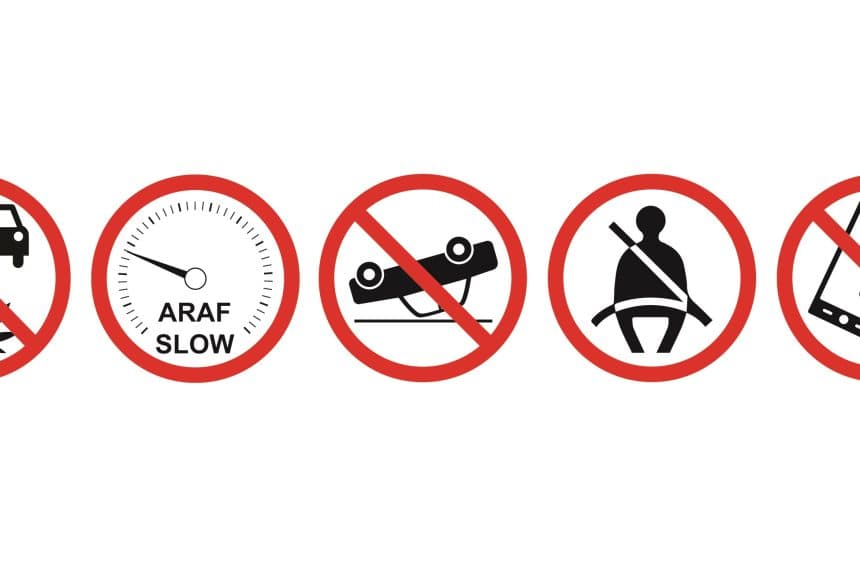
The awareness campaign also highlights the Fatal 5 – the five main causes of road traffic collisions and injuries:
- Don’t drink and drive
- Kill your speed
- Don’t get careless
- Belt up
- Switch it off
Councillor Terry Evans, Lead Member with responsibility for Road Safety and Traffic Management said “Road safety is everyone’s responsibility. Whether you are driving, cycling, walking, riding a horse or using a motorcycle, small actions can make a big difference.”
“By slowing down, staying alert, wearing a seatbelt, keeping mobile phones away and never driving under the influence, we can all help reduce the risk of serious injuries and keep our communities safe.”
“I would encourage everyone to refresh their knowledge and take care on every journey, especially on rural roads and around vulnerable road users.”
Residents are encouraged to refresh their knowledge of the highway code and take extra care on every journey, no matter how short or familiar the route may be.
More information can be found on the Road Safety Wales website, and you can read the Highway Code on the GOV.UK website.