Category: Featured

Featured posts

  • WATCH: Dementia Action Week (Alwyn Jones Interview)

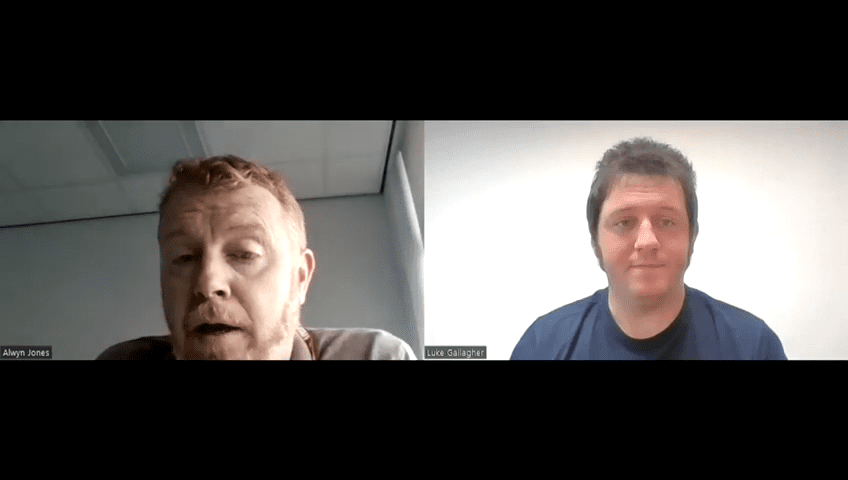
    WATCH: Dementia Action Week (Alwyn Jones Interview)

    Alywn Jones interview transcript

    LG: Hi again everybody. It’s Luke again and it’s Dementia Action Week still. I’m coming to you with another interview today if you’ve been watching previous ones, we’ve been speaking to some carers in our community, some very, very special guests and today is no different. I’m joined by Chief Officer for Social Care in Wrexham County Borough Council, Mr Alwyn Jones, hello Alwyn, How are you?

    AJ: Hiya, good morning Luke, how are you? I’m very well thank you.

    LG: Good, good, thanks for joining us today. As you’re probably aware, like I just said, it is Dementia Action Week and we’re bringing together some special guests for interviews such as this which you’ve kindly offered to do with the idea being asking five different people the same three questions to show the theory like we like to tell everybody that if you’ve met one person living with dementia, you’ve only met one person living with dementia. With that in mind, I’ll ask my first question to you which is tell us about yourself really, what’s your involvement and story with dementia?

    AJ: Thank you very much, so my name is Alwyn Jones and I’m the Chief Officer for Social Care here in Wrexham. I think as a council it’s really important that we’re able to show that we have a very strong commitment for those people living with dementia and their carers and we make sure that Wrexham is actually a good place, a safe place for people with dementia to be able to live and that they can continue to live as independently as possible. So that we’re in a position where we can provide the right information, the right advice at the right time. Clearly, as the chief officer for social care, I’ve got a responsibility to make sure that when we need to give statutory services and support to both individuals with dementia and carers that we’re able to do that in a timely way but actually also really importantly, what we do as a council is really important is that we’re actually able to put in place support for people from diagnosis, support for people within the community and as I said that we actually produce a Wrexham that is safe for people to live in. I think I’m really pleased to say that we’ve successfully achieved the status of working towards being a dementia friendly authority and that’s for the third year running and that’s from the Alzheimer’s Society who gave us that status and I think that’s because we’ve been able to demonstrate that the changes we are making to the services for people with dementia across Wrexham and making sure that access is actually smooth and easy for people to get that sort of support. In essence, Luke, my role is that I oversee social care services here. We clearly are in a position where we need to be supporting people with dementia whether that is simply support, guidance, help or whether that’s where we need to put formal services and support in place for the individual with dementia or their carers.

    Get news and info from your local council – sign-up for email bulletins.

    LG: It’s brilliant that you’ve touched upon that achievement for the third year running, I’ve actually written a story about that which will be going out as well and it’s nice to be a part of and going out myself and doing the awareness sessions with members of staff to bring that and it’s a really good achievement that we’ve done for the third year running especially since we’ve had the pandemic in mind but things like the dementia awareness sessions and dementia awareness weeks that’s going on, how important do you feel that campaigns like that are happening and how vital do you think they are in the community?

    AJ: I think they’re really important to be honest with you. Raising the awareness of people living with dementia and trying to remove some of that stigma and maybe some of the negativity that there is associated with people living with dementia is really, really important. We need in a very safe and appropriate way to be able to give people the opportunity to learn more about dementia and the differences that we can make both as an individual, as an authority and as a member of the community that we can actually make to the lives of people living with dementia so it’s really important that we do actually raise that awareness to reduce the stigma. There’s obviously going to be the Dementia Action Week between the 16th and 22nd May and that’s a real opportunity for us to share the work that we’ve achieved so far as an authority. Social care staff who we currently have as Dementia Friends Champions have completed a number of dementia friendly sessions with local schools who are really important to building upon a generation of young people who have an understanding of the needs of people living with dementia so actually, when they become adults, and when they become older, that stigma that we’re talking about actually is less felt, it’s not there in the same sort of way and what we have is a more educated society. In very simple terms Luke, it’s really, really important we raise awareness, not just of our staff, of the community and people in local businesses so that actually living with dementia becomes easier, there is less stigma associated with it.

    LG: Definitely, definitely, and that’s spot on, I couldn’t agree more there and, with that in mind, it brings us quite neatly to the last question. During these sessions, we like to ask people in attendance to think of one positive action that they could do to help someone’s life easier living with dementia. For the people watching now, if you could pick just one positive action now, what would you suggest?

    AJ: I think really Luke we’ve sort of touched upon it in the last answer I gave which is basically we know that the number of people living with dementia is actually increasing and it’s considered that in the next few years that there’ll be about a million people living with the disease in the next few years. As an authority, it’s not just the responsibility of us as social care but as the whole council and actually I’d say more broadly for communities to have an understanding of what it’s like to live with dementia. I think the one big thing that I feel we should do is actually have that awareness so that actually our departments, the council and communities make small changes and actually get involved in some of the dementia friendly sessions and that’s really important because the more that we inform, the less the stigma is and we gear services in a way that actually, unconsciously make sure that our services are dementia friendly. So I think people can become part of those dementia friends sessions by contacting commissioning@wrexham.gov.uk I would encourage everyone to do that. As part of that week, we have also commissioned the virtual dementia tour bus to return to Wrexham in June. That gives people an opportunity to experience first-hand what the effects of living with dementia are and we’ll be promoting that on our social media pages when that opportunity becomes available. I think in simple terms, the action I want to take is that we do raise that awareness and we do make people more familiar with it. We make people less scared, we make people comfortable and we make people think about how they make sure the services work in the right way to support individuals with dementia, carers who care for someone with dementia and actually make it as we said very much at the start a safe society for individual with dementia to live within.

    LG: Brilliant and I just got to say congratulations to you and your team for getting us that third consecutive year and no doubt we’re going to get it for a fourth year as well, working towards being dementia friendly so, well done on that one and once again, thanks very much for your time today. I think everyone will agree it’s been really insightful because it’s important for people to know what their local authority does for them as well so thanks very, very much for your time today and enjoy the rest of Dementia Action Week. Thank you for joining us.

    AJ: Thank you very much Luke.

    LG: Brilliant, take care. Bye. Well thanks very much again everybody and enjoy the rest of the activities and awareness. I’ve been Luke again and I’ll be bringing you another interview tomorrow so do please, stick around for it. Thanks.

    Get our top stories by email.

    [button color=”” size=”large” type=”square_outlined” target=”new” link=”https://public.govdelivery.com/accounts/UKWCBC/subscriber/new?topic_id=UKWCBC_5″]SIGN UP[/button]


  • Small changes can make a huge positive impact for those living with dementia

    Small changes can make a huge positive impact for those living with dementia

    Dementia Action Week 17-22 May

    Led by the Alzheimer’s Society, Dementia Action Week sees the public come together to improve the lives of people affected by dementia.

    When raising awareness about dementia, there are five key messages that should be remembered:

    1. Dementia is NOT a natural part of ageing – Not everyone is going to develop dementia when they grow old and not everyone who develops dementia is old. Although cases are rare, it has been known for people in their 20s to be diagnosed.
    2. Dementia is caused by diseases of the brain – Just like any other organ in the body can be damaged by disease, dementia is caused when a disease physically damages the brain.
    3. Dementia is not just about losing your memory – The brain controls a variety of functions aside from our memory. Communication, motor skills, sequencing and vision can all be affected my dementia.
    4. There is more to the person than the dementia – In exactly the same way we would look at a person with cancer or diabetes and see the person before the illness, there is more to the person than the dementia.
    5. It is possible to live well with dementia – For people who are living with dementia, they may well still be able to work, drive and have relationships. What they can do and how long for would depend on the circumstances of the individual.

    The term of ‘living well’ will mean different things for different people of course, and it is not to say that living with dementia does not have challenges. It is still possible to live well despite these challenges and people around the community can all help with this.

    How you can help

    There are all sorts of ways for people to help those living with dementia through little changes to their approach to the subject.

    • Change your language – When talking about dementia, don’t use negative words that evoke bad thoughts on the condition. A good example would be to say someone is “living with” dementia, rather than “suffering with”.
    • Visit someone with dementia – That spare five minutes to an hour you may have in your day could bring such a positive boost to someone living with dementia.
    • Be patient with people – It can be easy to get frustrated when having to repeat the same answers to the same questions multiple times. It may also be frustrating when trying to jog someone’s memory. Wait, remember it is not their fault why they are asking again or can’t remember a memory from the other day. You may have to say the same thing over but getting irate or shouting at someone living with dementia will only upset them. They won’t remember why they feel upset next time they see you but the feeling will still be there.
    • Join or start a Dementia Friendly Communities steering group – Get the community involved in spreading awareness and ensuring life for those living with dementia is as comfortable as possible.

    There are many more ways to get involved and support those living with dementia. It may also surprise you to know that shops in your own community also take part in the change.

    Hiding in plain sight

    Supermarkets do so many positive things that many of us don’t notice. For instance, some open up earlier for those living with dementia and they turn the music either down or completely off to reduce stress levels.

    They take away the black carpets that you see at the front of the shop. This may seem strange to you but think of someone who has vision impairment due to dementia. To them, that mat looks like a big hole in the ground that they may fall into so they won’t go near it for fear of falling. Taking the mat up takes away that anxiety.

    Some supermarkets have dedicated members of staff that will assist people with dementia as they go about their visit to the shop and help them with their money if counting is a struggle.

    These are just a few of so many more positive impacts taking place right on your doorstep. Can you think of one that you could start doing?

    Advances in technology

    A new addition to the ways in which those living with dementia can be cared for more effectively is the introduction of some incredible new technology. The device is called RITA, which stands for Reminiscence Interactive Therapy Activates.

    It comes in the form of user-friendly touch screen or tablet to lend entertainment and therapy to assist patients in remembering and sharing things form their past using music and watching news reports of historical events. Other features include films, karaoke and playing games.

    There are so many benefits from this device. It helps families and carers communicate with the person more effectively and positive mood and wellbeing results for the patient and carer.

    A personal file can be created with all the individual’s needs and likes – such as their favourite music and films. This creates a much more personalised and effective way to care for that person according to not only their medical requirements but also their personal interests, which can also be a calming factor to reduce anxiety and stress.

  • Donning denim in aid of dementia

    Donning denim in aid of dementia

    Dementia Action Week 16-22 May

    Led by the Alzheimer’s Society, Dementia Action Week sees the public come together to improve the lives of people affected by dementia.

    The amazing children from around the community of Wrexham have all been putting in a tremendous effort to raise money and awareness of dementia during this year’s action week.

    Over the past few months, schools throughout the county borough have been taking part in Dementia Friends sessions to learn all about the condition.

    During these sessions, they have been learning how to make the world a better place for those living with dementia by looking at ways to make life easier for individuals and families affected by the disease.

    Rooting through the wardrobe

    Each year during Dementia Action Week, there is a day called “Denim for Dementia Day” where people are encouraged to dig out their denim items of clothing and wear them in support of Dementia Action Week.

    Like in previous years, pupils in Wrexham did not let the side down with children from Ducks and Ducklings, Victoria School, Holt CP and Isycoed School all sporting their most stylish items of denim in aid of the amazing cause.

    As you can see from the pictures below, the day was a great success and everyone involved has done the community of Wrexham proud with all their brilliant efforts.

    Alwyn Jones, Chief Officer for Social Care at Wrexham County Borough Council said, “The response to the Dementia Action Week and Denim for Dementia Day from the children has been magnificent.

    “They have taken such a positive and mature approach to the subject, and shown incredible empathy, and I’m very proud of every single person who has taken part.

    “There are many people out there living with dementia and some children will have family members who have the condition. So every little action they take – be it wearing their denim clothes or promising to make a pledge to someone living with dementia – will contribute towards making a brighter and kinder future for those affected by the condition.”

  • Be #PestSmart and ditch the weedkiller

    Be #PestSmart and ditch the weedkiller

    We’re supporting @DwrCymru’s #PestSmart scheme to help protect people, water and the environment from the chemicals in pesticides.

    They’re running the scheme because @DwrCymru’s routine water monitoring programme has detected pesticide traces in areas they’ve never seen them before. They’re too low to pose a risk to drinking water, but they can breach drinking water standards.

    Get news and info from your local council – sign-up for email bulletins.

    #PestSmart promotes safer ways to manage pests, weeds and plant diseases in your garden without impacting the environment.

    Pesticides like weedkiller can cause harm to people and wildlife, so it’s important to take special care with them.

    Store Smart

    • Store pesticides in a safe place out of reach of children or animals
    • Only buy what you need. Don’t buy pesticides in bulk
    • Always read the label

    Use Smart

    • Only apply pesticides to areas you want to treat. Excess pesticides could find their way into the environment
    • Only use pesticides in good weather conditions
    • Don’t use pesticides near pollinators like bees and butterflies
    • Clear the area of children and pets before you use a pesticide

    Dispose Smart

    • Dispose of pesticides following the instructions on the bottle
    • Never pour pesticides down the sink, any leftovers should be disposed of at your local waste centre

    Try Alternatives

    • Encourage natural predators in your garden
    • Pull weeds out by hand or use natural alternatives to pesticides

    For guides, blogs and advice on how to manage your garden without relying on pesticides head to the #PestSmart website.

    Get our top stories by email.

    [button color=”” size=”large” type=”square_outlined” target=”new” link=”https://public.govdelivery.com/accounts/UKWCBC/subscriber/new?topic_id=UKWCBC_5″]SIGN UP[/button]

  • Knife Angel to come to Wrexham!

    Knife Angel to come to Wrexham!

    We’re pleased to announce that, in partnership with North Wales Police, Coleg Cambria  and the British Ironworks, the famous Knife Angel created from knives collected across the United Kingdom, will at last be coming to Wrexham to Queens Square in October.

    The Knife Angel is a nationally significant piece of art made from 100,000 seized knives and created by artist Alfie Bradley. It stands an impressive 27 feet tall and was designed to be effective in changing attitudes to violent behaviour and to act as a memorial designed to celebrate those whose lives have been lost through knife crime.

    Get news and info from your local council – sign-up for email bulletins.

    Some of the blades also have inscriptions on them which are messages from families who have lost loved ones due to knife crime.

    It was specifically created to highlight the negative effects of violent behaviour and for the 30 days there will be a programme of workshops and visits aimed at young people in Wrexham.

    “The Knife Angel is a crucially important concept”

    Ian Bancroft, Chief Executive of Wrexham Council, said, “I am really pleased that we are at last able to bring the this nationally significant artwork to Wrexham. It comes with a serious message and I know there are lots of activities being prepared to ensure the Knife Angel along with its message is experienced by as many young people as possible. All members of the public will of course be able to take in the sight that will surely bring direct benefits to the town centre.”

    Acting Chief Inspector Luke Hughes of North Wales Police believes “The Knife Angel is a crucially important concept and seeks to remind all of us of the potential tragedy associated with knife crime. It is incumbent on the community to come together to understand the significance of this event and use the Angel as a starting point in making North Wales an even safer place in which to live, work and visit.”

    The artwork was originally intended to be in Wrexham in July 2020 but had to be postponed due to the Covid-19 pandemic.

    In Wrexham the Knife Angel has inspired the partners to create it’s own sculpture which is is under construction at the Coleg Cambria’s Bersham Road site, where students and staff will spend the next year welding and fabricating submitted items – including blades and knuckle dusters – onto a steel frame.

    Assistant Principal for the Institute of Technology and Site Lead at Bersham Road Karl Jackson said: “This statue will form the centrepiece for multi-agency work that will inform and educate in an effort to maintain low instances and reduce occurrences of knife crime in the area.

    Guy Vine, Young People’s Mentor paid tribute to Youth Justice Service and Youth Service who were key to bringing the Knife Dragon project together, he said, “Without their support and passion to do something positive the group would never have got off the ground. Now the Dragon is in production they, like us all, look forward to its completion and unveiling.”

    You can read more about this here.

    Bydd draig gyllyll yn cael ei defnyddio fel arf ar gyfer addysg.

    Get our top stories by email.

    [button color=”” size=”large” type=”square_outlined” target=”new” link=”https://public.govdelivery.com/accounts/UKWCBC/subscriber/new?topic_id=UKWCBC_5″]SIGN UP[/button]

  • Dementia-friendly status upheld for council

    Dementia-friendly status upheld for council

    Dementia Action Week 16-22 May

    Led by the Alzheimer’s Society, Dementia Action Week sees the public come together to improve the lives of people affected by dementia.

    Wrexham Council has successfully maintained the status of ‘working towards being a dementia-friendly authority’ for the third consecutive year running as confirmed by the Alzheimer’s Society.

    As well as the continued support from the adult social care department, there are also dedicated Dementia Friends Champions within the authority who deliver awareness sessions to other members of staff to work towards Wrexham becoming a dementia-friendly authority.

    Family carers and professional carers were affected greatly by the pandemic and a report found that between March and June 2020, a quarter of people in the UK who died from Covid-19 had dementia.

    It was during these challenging times that the council provided as much support as possible to those individuals and their families who are affected by dementia.

    Continuing to push forward

    With the status maintained for the third year, the council continues to keep the standards high and to keep improving life for those living with dementia.

    Upon hearing the news of this achievement, Alwyn Jones, Chief Officer for Social Care said, “It is fantastic to hear that Wrexham Council has maintained its status of working towards being a dementia-friendly authority.

    “There are so many of our staff that work so tirelessly to provide support to those living with dementia and their families, and receiving this accolade reflects this.

    “National research has shown that the Covid-19 pandemic had a negative impact on the mental health of those affected by dementia. Their feelings of isolation increased and a marked decline in physical wellbeing and their cognitive abilities was noted.

    “So it was more important than ever to maintain our high standards of support and to make sure that support is always there for those in our community with dementia and their families”.

  • We’re Hiring – Recruitment Evening for Adult and Children’s Social Care

    We’re Hiring – Recruitment Evening for Adult and Children’s Social Care

    Our Adult and Children’s Social Care team is holding two recruitment evenings in the newly refurbished Crown Buildings on 23 and 24 May between 4pm and 7pm.

    Following a transformation in the delivery of care for children and adults in Wrexham the team has some new exciting opportunities for Administration and Support Workers.

    Get news and info from your local council – sign-up for email bulletins.

    Everyone is welcome to go along and have a chat with staff to learn more about the services and benefits of working with us.

    This is a pre booked event. To book your place go to:

    May 23 – 4pm-7pm – Support Workers & Administration  https://www.eventbrite.co.uk/e/337961169957

    May 24 4pm-7pm – Social Work https://www.eventbrite.co.uk/e/338049353717

    For more information email SocialCareRecruitment@wrexham.gov.uk

    Get our top stories by email.

    [button color=”” size=”large” type=”square_outlined” target=”new” link=”https://public.govdelivery.com/accounts/UKWCBC/subscriber/new?topic_id=UKWCBC_5″]SIGN UP[/button]

  • How does dementia affect memory loss? – The condition explained

    How does dementia affect memory loss? – The condition explained

    Dementia Action Week 16-22 May

    Led by the Alzheimer’s Society, Dementia Action Week sees the public come together to improve the lives of people affected by dementia.

    Here’s a little analogy to help understand how short term (recent) and long-term memory are affected by dementia and how it affects our emotions.

    A library dedicated to you

    Imagine a person who is 70 years of age. They are stood next to a bookcase that is the same height as the person. It is a very special bookcase because it holds all the facts about that individual’s life that they have gathered over the years.

    Each fact or memory is represented by a book and they all form parts of that person’s life such as skills they have learned.

    The top shelf hold the latest books/memories such as things like what you had for breakfast. The shelf by the person’s shoulders holds maybe memories of retiring back in their 60s.

    Going further down the shelf to maybe the person’s knees is their 20s. This may be memories of early careers they had or meeting their partner. The bottom shelf will contain the early memories from childhood such as starting school.

    Dementia’s effect on the bookshelf

    Now picture that dementia has come along and started to rock the bookcase from side to side. Like all bookcases this happens to, books get jumbled, they fall, or they get damaged. To someone living with dementia, their books will fall from the top where the most recent memories are kept.

    As dementia continues to rock the person’s bookcase over time, their upper shelves will empty. What that person then thinks of as a recent memory will actually be from further back in their life.

    This means that the individual may well remember things from their childhood clearly, because those books are safe on the bottom shelf. It won’t be as easy to remember the most recent memories such as what they had for breakfast because this book has fallen from the top shelf.

    The other side to the story

    The brain is made up of more than one bookcase. There is a second bookcase, which stores all the feelings and emotions a person can experience. It is a much stronger and heavier bookcase. This means dementia has a harder time trying to shake this bookcase so the books containing all the feelings and emotions are much safer.

    Each book on the factual bookcase (the case with all the memories, skills and facts) has a matching book on the emotional bookcase. For example, a person may have a book on one of their teachers, which has details like what that teacher looked like and how long they taught the person.

    Over on the emotional bookcase, it has a matching book with the feelings for that teacher such as they were the person’s favourite teacher, they inspired them, or they were funny.

    So, the person in their 70s is stood next to their bookcases. Imagine their grandchild has come to visit them and they go for a nice day out together. They have a walk near the beach and an ice cream.

    This day makes the person living with dementia feel loved and very happy which creates a new book on the emotional bookcase.

    At the end of the day, dementia has rocked the flimsy factual bookcase, which has caused the book with the memory of the nice day out to fall off. Even though the memory of that day out with their grandchild has gone, the happy feeling and the feeling of being loved is still there and will remain next time that person sees their grandchild again.

    Something to be mindful of

    When you spend time with someone living with dementia, they may not remember everything you’ve done together or where you’ve been. This is not their fault that the books have fallen out of the shelves, this is just the way the condition affects their memory.

    All that person will know is that they feel happy because of the time they have spent with you. This is so important that people continue to spend time with those living with dementia to help them live well.

    It is also very important to remember not to get cross or upset if someone with dementia forgets things. How that person is feeling is more important than getting the facts right.

  • Shine A Light for World Neurofibromatosis Day on 17 May (Tomorrow)

    Shine A Light for World Neurofibromatosis Day on 17 May (Tomorrow)

    We’re pleased to be joining with Nerve Tumours UK to support and raise awareness Neurofibromatosis (NF) which is one of is one of the most common neuro-genetic conditions, causing tumours to grow on nerve endings.

    NF has many associated medical, physical and psychological conditions and 60% of those affected have learning disabilities and up to 75% are registered as disabled.

    Get news and info from your local council – sign-up for email bulletins.

    People with NF live in constant pain, can be vulnerable and are often isolated.

    To show support to those affected including their families and carers we’ll be lighting up the Guildhall blue on the evening of the 17 May and we’ll be joined by over 200 other locations across the UK and Ireland who will be doing the same.

    The event also marks 40 years of Nerve Tumours UK who are the leading voice and support network for people living with Neurofibromatosis.

    Get our top stories by email.

    [button color=”” size=”large” type=”square_outlined” target=”new” link=”https://public.govdelivery.com/accounts/UKWCBC/subscriber/new?topic_id=UKWCBC_5″]SIGN UP[/button]

  • Let’s put an end to illegal puppy breeding

    Let’s put an end to illegal puppy breeding

    Residents and businesses are being urged to speak up about illegal puppy breeding and report it anonymously to Crimestoppers.

    Trading Standards Wales and the charity Crimestoppers have now joined forces to provide a service that enables members of the public to anonymously provide valuable information that can help tackle illegal puppy breeding.

    STAY SAFE – GET THE LATEST ALERTS ON SCAMS, PRODUCT RECALLS AND OTHER PUBLIC PROTECTION ISSUES

    It is the latest issue that the two organisations are working on to encourage members of the public to provide information on concerns they might have, 100% anonymously.

    Roger Mapleson, Trading Standards and Licensing Lead, said, “Whilst there are limited circumstances in which private individuals can breed from their family pet without the need for a licence we advise people to contact their Local Authority for further advice. This is to ensure they are bred and cared for responsibly. It’s important that we are able to identify and tackle illegal puppy breeding which will help stop animals suffering in silence purely for profit.

    “Typically puppies are advertised on social media and you should always check where the puppy was born for yourself, few illegal dog breeders will allow this and will discourage it saying it’s for your convenience. Learn to walk away and report the post and also phone Crimestoppers with all the information you have.

    Judith Parry, Chair of Trading Standards Wales, said: “We’re delighted to be working with Crimestoppers and giving members of the public a way to report these crimes anonymously.

    “Unlicensed dog breeders do not have to follow the rules and will not be subjected to welfare inspections by the Local Authority. Such businesses are known as Illegal Breeders or Puppy Farmers.

    “This leads to dogs being exploited by criminal gangs to make, and launder, money.”

    There are several signs to spot when it comes to illegal puppy breeding:

    • They may keep their puppies in awful conditions
    • They may not ensure the animals welfare
    • They may have poorly socialised dogs and puppies
    • They may overbreed from their dogs

    If you are concerned or suspicious of illegal dog breeding in your area, then report it to Crimestoppers on 0800 555 111 or visit http://crimestoppers-uk.org and tell them what you know. You’ll stay 100% anonymous – always.

    Get the latest info on scams, product recalls and other public protection issues.

    [button color=”” size=”large” type=”square_outlined” target=”new” link=” https://wrexham.gov.uk/english/user_register/register.cfm”] SIGN ME UP NOW [/button]